Free Consultation: Call 239-590-0861 or schedule a call with our local teamSchedule a call

Free Consultation: Call 239-590-0861 or schedule a call with our local teamSchedule a call
Proudly serving families in Fort Myers, Cape Coral, Naples, Bonita Springs, and surrounding Southwest Florida communities.
Home hospice provides expert medical support — nurses, doctors, and aides — but only through scheduled visits, not around-the-clock presence. Here are three things a former hospice nurse wants every family to know before they start.
Home hospice care is a compassionate and invaluable service that provides specialized medical, emotional, and spiritual support to individuals facing life-limiting illnesses in the comfort of their own homes. It is a holistic approach to end-of-life care that focuses on enhancing the quality of life for both patients and their families.
Home hospice teams typically include skilled nurses, social workers, chaplains, and volunteers who work collaboratively to address the unique needs and preferences of each patient. Through Home Hospice services they offer pain and symptom management, emotional counseling, and guidance on making informed decisions about treatment options and advance care planning.
One of the key benefits of home hospice care is the ability to maintain a sense of familiarity and security for patients and their families during a challenging time. Patients can receive care in a setting that is not only physically comfortable but also emotionally comforting, surrounded by loved ones and familiar surroundings. This approach not only helps alleviate physical suffering but also provides emotional and psychological support, ensuring that patients can spend their final days with dignity, peace, and a sense of control over their care.
Home hospice care allows individuals to create meaningful memories with their families and friends in a setting that holds personal significance, offering a compassionate and dignified way to navigate the end-of-life journey.
Abby Services of Fort Myers and Cape Coral has been helping families find caregivers to assist with in-home care since 1997. With the help of a private professional caregiver, individuals can have the in-home care and support they want and need to remain safe and supported.
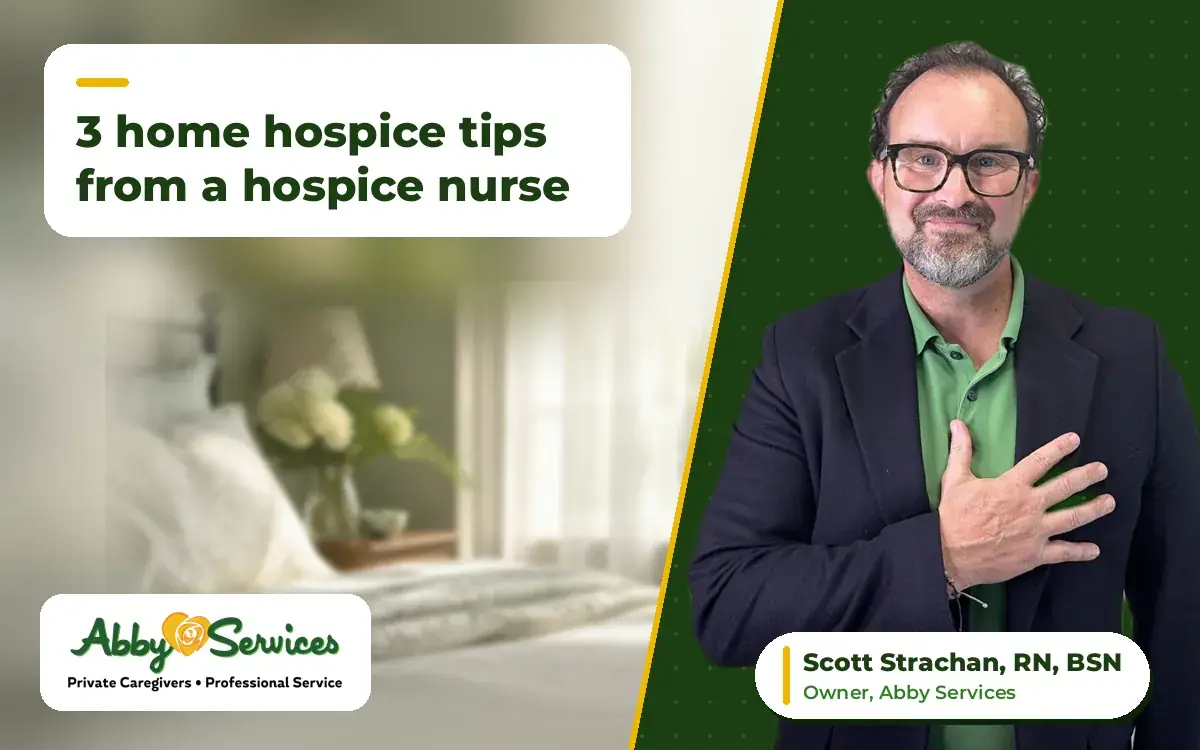
Abby Services is owned and operated by a former hospice nurse Scott Strachan. Through his experience as a nurse and caregiver, Scott is able to help provide the insight and support to help guide families seeking home hospice care.
Hospice is a valuable resource. However, it can only assist those willing to receive their support. Hospice has an undeserved stigma to many that leads them to refuse to seek the support hospice provides.
While this stigma is understandable, families should genuinely consider the benefits hospice provides. The benefits of hospice should be considered when appropriate and available. This is especially true for home hospice care.
To be considered a candidate for hospice care an individual requires a doctor to certify their illness is terminal and that they have 6 months to live.
This can be a difficult reality to confront however these guidelines can be fluid. It is recommended that families have a conversation with a hospice professional to discuss their specific situation.
Scott Strachan reports that he has had hospice patients who have received hospice care for years. Families also have to recognize that should they choose, they can stop hospice care at any point and resume traditional treatment.
Hospice provides many supplies necessary for an individual’s care and comfort. Having access to these supplies is especially important for those receiving at-home hospice care.
Even with all of the materials and support provided by hospice, there are common items that can help families providing home hospice care that are not provided. These items can help create a calm, comfortable, safe atmosphere for those receiving home hospice care.
The care, attention, support, and resources provided through in-home hospice are amazing. That being said, those receiving in-home hospice care may require more support than is provided by hospice.
Additional care and support may be provided by a spouse, friend, or family member. When an individual requires more care (or a family member providing support needs more rest) a private professional in-home caregiver may be considered. Abby Services can help you find a caregiver experienced in supporting families through home hospice.
If you or your loved one is considering seeking hospice support in Fort Myers and Cape Coral we can help find affordable home hospice care. Just call 239-590-0861 to learn how Abby Services can help!
Home hospice care provides specialized medical, emotional, and spiritual support to individuals facing life-limiting illnesses in the comfort of their own homes. Teams typically include nurses, social workers, chaplains, and volunteers who manage pain and symptoms, offer counseling, and help families with treatment decisions and advance care planning.
A doctor must certify that the illness is terminal with a life expectancy of six months or less. In practice these guidelines can be fluid — some patients receive hospice care for years — so families should talk with a hospice professional about their specific situation.
Yes. Families can stop hospice care at any point and resume traditional treatment if they choose.
Hospice provides most medical supplies, but families often need to add comfort items themselves: a sound machine, a baby monitor (or a bell on a clothespin), scent diffusers or candles, baby powder, and plenty of extra pillows for repositioning.
No. Home hospice provides scheduled visits from nurses, aides, and other team members, not around-the-clock presence. Ongoing hands-on care comes from family or a private in-home caregiver, which is where a nurse registry like Abby Services can help.
